A Love Letter to the River (and what came next)
What a river taught me about connecting what a flood scatters.
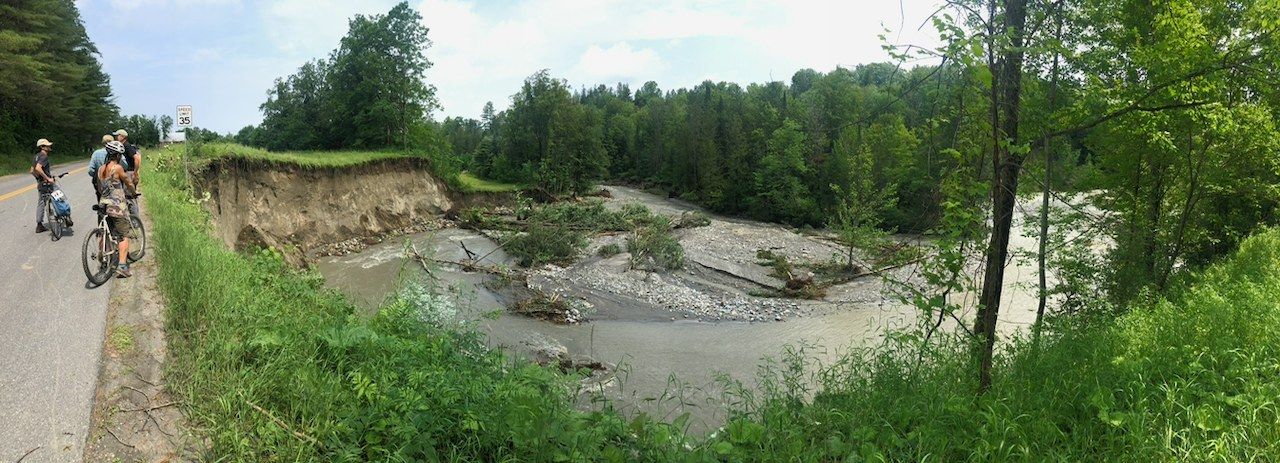
A Vermont river is a single channel that wants to wander. Left to itself it meanders across the flat of its valley, feeling for the least violent way downhill, setting the curve down a little differently each year. It is less a fixed thing than a long argument the water is having with the land, one that holds its shape only as long as nothing forces it straight. We forced it straight. For roads and rail and pasture we dredged the rivers deep and walled them in and made them run the line that suited us, and a river held to a line it did not choose stores that denial as force. Most of what a Vermont flood destroys is not the water rising over the banks. It is the river itself moving, cutting, reaching sideways for the floodplain we took, taking its room back all at once.
In July of 2023 it took back more than anyone living had seen. Nine inches of rain fell on Calais in two days. It was the wettest month Montpelier had ever measured. The Winooski climbed through downtown and crested at twenty-one feet, higher than Irene. In a century only the flood of 1927 had run higher, the one the oldest people had been raised on and never thought to see. A year and a day later, the remains of a hurricane named Beryl stalled over the same ground and it happened again. In Plainfield a wall of water took ten houses and seven bridges. In Lyndonville they pulled fifty people out of the water and lost one. The recovery and the next disaster had become the same event. The valley was learning what a forest already knows, that what goes too long unchanged destroys itself, that some things last only because they die and die and so live.
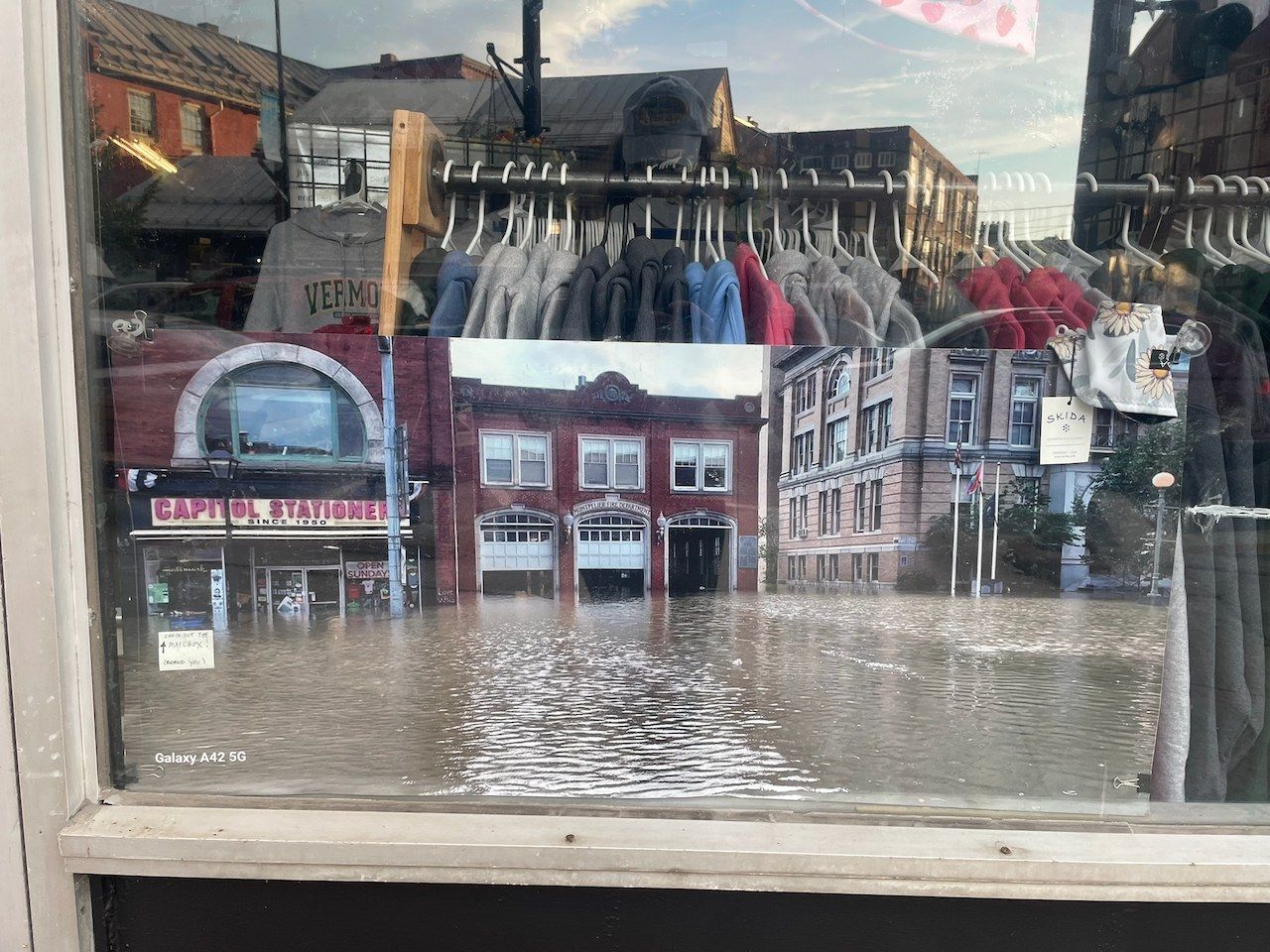
For three months before the second flood I had been driving into the Winooski Valley to clear out a storefront. The first flood had gutted it, and the last tenants had left it behind on Montpelier’s Main Street. You could read the water’s line on the wall, a brown tide-mark at knee height. We were not only emptying a room. A small town does not have many rooms where everyone is welcome at once, and the river had taken one of the few Montpelier had. So we gave it back with a show, and we did not call it a stand against the water. We called it A Love Letter to the River, because anger is not the only true thing you can say about a river that floods, and it is not the thing that brings people back into a room together. The river is also why the soil is rich and why the valley is here at all. More than thirty artists and farmers and elders came to hold the night up. We cooked a free meal and priced the rest pay-what-you-can, because a room that is only open to the people who can pay is not the town’s room.
The café did not last. The furnace gave out in our first winter and we ran out of money before we could fix it, and I have come to hold that the way the valley holds the flood, not as a failure but as something that left its lesson in the soil for the next thing to grow from. I had learned that once before, on a farm. My own body had given out, and I was the one being put back together, eating from a weekly box of vegetables. A stranger had built a whole system to get that food to people who could not otherwise reach it. What saved me was not luck. It was infrastructure, somebody’s deliberate work, reaching me at the moment I needed it. You do not forget being on the receiving end of that. As you work to mend the thing, the thing mends you, and you give the years after to building and telling the story of the kind of support that once caught you.
A flood does more than drown a town. It scatters everything the town learned while it was drowning, into a thousand inboxes and whiteboards and the memory of elders, where each person can reach only as far as their own tight radius. When the water came again in 2024, people were relearning at four in the morning what someone three towns over had already learned the hard way the summer before. I had come into the response on my own, working as a stipended organizer, doing whatever the recovery needed done. What it needed, I kept seeing, was a way to stop losing all that knowing between one flood and the next. So I wrote the contract for the thing that would hold it, and I built it: the public site for a toolkit that a coalition of more than ten organizations was assembling, the place all of it could finally be found. The fix was not to gather everything into one vault and keep it. It was to connect it. We are past the age of collecting information; the work now is connecting it, the way the fine threads under a forest reach into the roots of separate trees and join what could not otherwise touch, so that an old tree and a seedling and a stump feed from the same web.
So that is what the site does. A neighbor who comes in carrying a wet shop-vac and a question about a flooded basement finds, in the same few steps, the muck-out work and the volunteer crews and the neighbor-to-neighbor network and the people who have to be checked on first and the question of who pays for any of it, each one a channel that opens onto the others, none of it asking you to already know what to call it. The work itself is not glamorous. The volunteers will tell you it is ninety percent moving dirt and then squeegeeing what is left, dirty work that neighbors do for neighbors. It is the oak’s trick, the one that lets a hundred trees stand through a flood that would take any one of them alone, roots grown wide and laced together under the ground. The site holds that plainly. Load it once and it keeps working with the network down, so a charged phone or a solar battery can still reach it when the lines are out, which in a flood is the first thing to go.
I do not think of it as a website. I think of it as room given back, a channel laid down so the next flood’s hard knowledge has somewhere to move and join instead of scatter, the way you would give a river back its floodplain so the water has somewhere to go that is not through your town. Find the people who lived it. Find the support that made the difference. Lay it down where the next person can reach it in the dark. That is the whole of the work, and it is the same work whether I am telling the story or building the place the story lives.
Notes on lineage
- ”less a fixed thing than a long argument the water is having with the land,” after Jenny Odell, who writes that a river is best seen not as a thing but as “a series of flows and relationships that… hold together long enough” to be named (How to Do Nothing).
- “what goes too long unchanged destroys itself… die and die and so live,” Ursula K. Le Guin, “Dragonfly,” Tales from Earthsea: “What goes too long unchanged destroys itself. The forest is forever because it dies and dies and so lives."
- "not as a failure but as something that left its lesson in the soil,” after adrienne maree brown, Emergent Strategy: “In nature’s paradigm, there is no failure… everything is either growing… or it’s decomposing, leaving its lessons in the soil for the next attempt."
- "As you work to mend the thing, the thing mends you,” after Robin Wall Kimmerer, Braiding Sweetgrass: “as we work to heal the earth, the earth heals us."
- "We are past the age of collecting information; the work now is connecting it,” after the saying “we are no longer in the age of gaining information, we are in the age of connecting knowledge."
- "the fine threads under a forest reach into the roots of separate trees,” the mycorrhizal “wood wide web” of Suzanne Simard’s mother-tree research, and Sophie Strand, who writes that mycorrhizal systems “extend these networks… uniting diverse arrays” beyond a single plant’s “tight radius."
- "the oak’s trick… roots grown wide and laced together,” Naima Penniman, in adrienne maree brown’s Emergent Strategy, on the oak that survives the hurricane by interlocking its roots with its neighbors’.
- ”A Love Letter to the River,” the actual title of the opening gallery show at Access Café in Montpelier.
- Flood facts: NWS Burlington and Vermont Public reporting on the July 2023 and 2024 Vermont floods; the river-corridor and fluvial-erosion framing follows Vermont DEC’s river science.